


In the competitive household and industrial cleaning market, the product inside the bottle is only half the story. The other half? The bottle itself. For business buyers, procurement managers, and SME owners, selecting the right packaging for a floor cleaner isn't a minor detail, it's a critical business decision. The right bottle protects your formula, ensures user safety, enhances brand perception, and eventually impacts your bottom line. A failure in packaging can lead to costly leaks, product recalls, and damage to your company's reputation. This guide is designed for professionals like you. We will investigate into the technical specifications, material science, and design considerations that separate a functional, reliable container from a costly mistake. We'll explore everything from polymer choice to closure systems, providing the insights you need to make an informed packaging decision that supports your product and your production timelines.
Key Takeaways
- Choosing the right plastic, such as chemical-resistant HDPE or clear PET, is crucial for the safety and stability of your floor cleaner formula.
- The functional design of a floor cleaner bottle, including its ergonomics and stability, directly impacts the end-user's experience and perception of quality.
- A perfect match between the bottle's neck finish and the chosen cap is essential to create a leak-proof seal and prevent product loss.
- For hazardous formulas, selecting a bottle compatible with a Child-Resistant Closure (CRC) is vital for both safety and legal compliance.
- The bottle's design must provide enough space for a label that includes both impactful branding and all mandatory regulatory information.
Why High-Quality Packaging Is Crucial for Your Floor Cleaner Brand
Before we jump into the specifics of polymers and neck finishes, let's establish a foundational principle: your packaging is an integral part of your product. For a floor cleaner, which often contains active chemical ingredients, the container is the first line of defence. Its primary job is to ensure the product reaches the end-user, whether that's a homeowner or a commercial cleaning crew, in the exact condition you intended. High-quality packaging guarantees product integrity. It prevents contamination, guards against evaporation, and stops leaks that can create messes and safety hazards in warehouses, on retail shelves, or in a client's facility. A robust bottle ensures that the chemical composition of your cleaner remains stable and effective from the moment it leaves your production line to its final use. Besides, the packaging communicates value. A flimsy, poorly designed bottle can make even the most effective formula feel cheap and untrustworthy. Conversely, a sturdy, well-designed bottle instills confidence. It tells your customers that you care about quality, safety, and their overall experience. This perception is vital in a market where trust and reliability are paramount. It's not just about containing a liquid: it's about delivering a promise of quality and performance, and that promise begins with the bottle.
Choosing the Right Plastic: Material Science for Cleaning Formulas
The choice of plastic is perhaps the most critical technical decision you will make. Using the wrong polymer can lead to panelling (where the bottle walls collapse inward), stress cracking, or chemical leaching, all of which compromise your product and brand. Understanding the properties of different materials is essential for creating safe and stable plastic bottles.
High-Density Polyethylene (HDPE): The Durable Standard
When it comes to packaging chemical-based products like floor cleaners, HDPE is the undisputed industry workhorse. This material is renowned for its exceptional chemical resistance, making it compatible with a wide range of acidic, alkaline, and solvent-based formulas. It is tough, impact-resistant, and provides a great moisture barrier. While naturally translucent or milky in appearance, HDPE is easily colourable, allowing for strong brand differentiation without the need for full-body labels. Its rigidity and strength mean it can be moulded into designs with integrated handles, perfect for larger volume containers used in commercial settings. For any floor cleaner with aggressive ingredients, HDPE is almost always the safest and most reliable starting point.
Polyethylene Terephthalate (PET): For Clarity and Shelf Appeal
If your floor cleaner has a vibrant colour you want to showcase, or if your formula is less chemically aggressive, PET is an excellent option. PET offers glass-like clarity and a high-gloss finish, providing a premium look on the shelf that can attract consumer attention. It is lightweight yet shatterproof, offering a good balance of aesthetics and durability. While its chemical resistance is not as broad as HDPE's, it is perfectly suitable for many neutral or milder cleaning solutions. For brands targeting the retail market, the visual appeal of a crystal-clear PET bottle displaying a brightly coloured liquid can be a significant marketing advantage.
Matching the Material to Your Product's Chemical Composition
Eventually, the only way to be certain of compatibility is to test. The specific combination of surfactants, solvents, fragrances, and dyes in your floor cleaner formula will determine how it interacts with the packaging. We always recommend conducting rigorous stability testing where you fill the chosen bottle with your product and observe it over time under various conditions. This helps identify potential issues before you commit to a full production run. As your packaging partner, we can provide material specification sheets and offer guidance based on our extensive experience, but a final compatibility test with your unique formula is a non-negotiable step for ensuring product safety and longevity.
Functional Bottle Design and Its Impact on User Experience
Beyond material choice, the physical design of the bottle plays a massive role in its functionality and acceptance by the end-user. A poorly designed bottle can be awkward to handle, difficult to pour from, and unstable on a shelf, all factors that create a negative user experience.
Ergonomics, Handles, and Grip Considerations
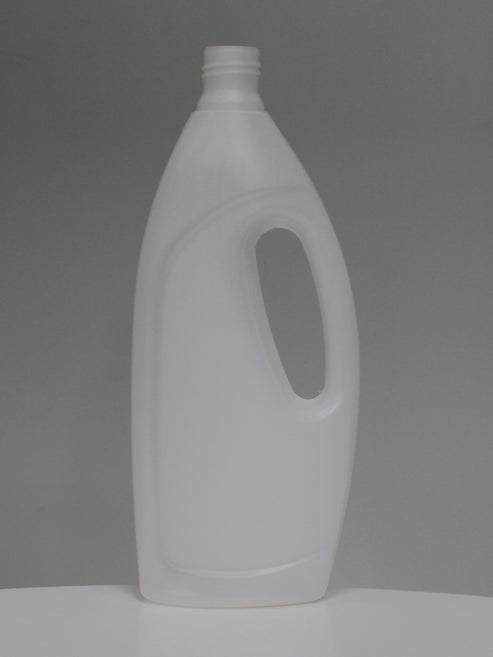
Think about how your customer will use the product. For a one-litre bottle, an indented grip area might be sufficient to allow for a secure, one-handed hold. For larger 2-litre or 5-litre containers, an integrated handle is essential for safe lifting and controlled pouring. The design should feel balanced in the hand, not top-heavy or clumsy. The base of the bottle is also important: it needs to be wide and stable enough to prevent tipping, especially in a busy commercial environment. These ergonomic details may seem small, but they significantly influence how the user perceives the product's quality and ease of use.
Common Sizes: From the 750ml Floor Polish Bottle to Bulk Formats
Market needs dictate the size. The retail sector typically favours consumer-friendly sizes like the 750ml Floor Polish Bottle, 1-litre, or 2-litre formats. These are easy for homeowners to store and handle. For the business-to-business market, bulk formats are standard. 5-litre bottles are common for small businesses and contract cleaners, while 25-litre drums cater to large-scale industrial or institutional use. Offering a range of sizes allows you to target different market segments effectively. We ensure we carry stock of the most common formats to meet these diverse needs, helping you get your product to market faster.
Neck Finishes and Ensuring a Perfect Seal
This is a highly technical but crucial aspect of bottle design. The 'neck finish' refers to the dimensions of the bottle opening, including the thread style, diameter, and height (e.g., 28/410, 38/400). This specification must perfectly match the closure (cap or sprayer) you intend to use. A mismatch between the bottle neck and the cap is the number one cause of leaks. A proper seal, often aided by an induction liner or a tight-fitting wad, is essential to prevent product loss, ensure safety during transit, and maintain the formula's integrity. We provide detailed specifications for all our bottles to ensure you can pair them with the correct closures for a secure, leak-proof seal every time.
Essential Closure and Dispensing Systems
The closure system is the gatekeeper of your product. It seals the bottle, prevents spills, and provides the mechanism for dispensing the floor cleaner. The right choice depends entirely on the product's formula and its intended application.
Standard Screw Caps and Child-Resistant Options
For simple, cost-effective sealing, a standard screw cap is the default choice. They are reliable and easy for adults to open and close. But, if your floor cleaner contains ingredients classified as hazardous, a Child-Resistant Closure (CRC) may be a regulatory requirement. CRCs require a two-step motion (like push-and-turn) to open, providing an essential layer of safety in households with children. Choosing a CRC demonstrates a commitment to safety and responsibility, which can be a strong selling point.
Flip-Top and Spout Caps for Controlled Pouring
For concentrated formulas that need to be diluted or products that require precise application, a dispensing cap is ideal. Flip-top caps allow for easy, one-handed opening and closing, while spout caps (or turret caps) provide a narrow stream for controlled pouring. These closures help the user dispense the right amount of product without messy glugging or wasteful spills, improving the overall user experience and making the product last longer.
Trigger Sprayers for Ready-To-Use Applications
Ready-to-use (RTU) floor cleaners designed for spot cleaning or spray-and-mop systems require a trigger sprayer. The quality of the sprayer mechanism is critical here. A cheap trigger can fail, leak, or provide an inconsistent spray pattern, leading to customer frustration. A high-quality trigger sprayer delivers a consistent mist or stream, features an ergonomic design for comfort, and is built from chemically resistant components to ensure it doesn't degrade over time.
Labelling, Branding, and Regulatory Compliance
The surface of your bottle is valuable real estate. It's where your brand comes to life and where you must communicate vital safety and usage information. The bottle's design and your labelling strategy must work in harmony.
Maximising Your Bottle's Surface Area for Branding
When selecting a bottle, consider the 'label panel', the flat, smooth area designed for label application. A bottle with a large, uninterrupted label panel gives your graphic designers more freedom to create impactful branding. Some designs incorporate a recessed label panel, which helps protect the label edges from scuffing and peeling during transit and handling. This small detail can keep your product looking pristine on the shelf. The shape of the bottle itself can also become a recognisable brand element, so think about how the silhouette can stand out from competitors.
Meeting Labelling Standards for Chemical Products
For any chemical-based floor cleaner, labelling is not just about marketing: it's a matter of legal compliance. Your labels must include specific information, which may include hazard pictograms (as per the Globally Harmonized System), signal words ('Warning' or 'Danger'), ingredient lists, clear usage instructions, first aid information, and manufacturer contact details. Failing to meet these regulatory standards can result in fines and force a product recall. It's essential to understand the requirements for your specific product category and ensure your chosen bottle has adequate space to display all this information clearly and legibly.
Partnering With a Reliable Plastic Bottle Supplier
Your choice of a packaging supplier is as important as your choice of a bottle. A good partner does more than just sell you products: they provide expertise, reliability, and support that helps your business run smoothly.
What to Look for in a Plastic Packaging Partner
When evaluating a supplier, look for deep technical knowledge. Can they advise you on material compatibility? Do they understand neck finishes and closure systems? Secondly, assess their commitment to quality. Consistent moulding, contaminant-free materials, and rigorous quality control are non-negotiable. Look for a partner with a wide range of in-stock options. A supplier with a comprehensive inventory can help you get your product to market faster without long lead times. A local presence is also a huge advantage, as it simplifies logistics and ensures faster delivery. As a leading Plastic shop, we pride ourselves on ticking all these boxes for our South African clients.
Navigating Lead Times and Ensuring Supply Chain Consistency
Production lines wait for no one. A delay in your packaging supply can bring your entire operation to a halt, leading to lost revenue and strained customer relationships. A reliable supplier understands this. They maintain consistent stock levels of their most popular items and have transparent processes for managing orders and lead times for custom runs. Ask potential suppliers about their stock-holding policies and typical delivery schedules. A partner who can provide consistent, on-time delivery is invaluable and allows you to manage your own production and inventory with greater confidence.
Conclusion
Selecting the right packaging for your floor cleaner is a strategic decision that impacts every facet of your product, from safety and stability to market perception and user satisfaction. It requires a careful consideration of material science, functional design, and regulatory compliance. The Bottle is not a commodity: it's a key component of your product's success. By prioritising quality and functionality, and by partnering with a knowledgeable and reliable supplier, you can ensure your packaging works as hard as the formula inside it. This proactive approach protects your product, builds your brand's reputation, and provides the solid foundation your business needs to grow. It's about more than just plastic: it's about performance, reliability, and peace of mind.
Frequently Asked Questions
What is the best plastic for a floor cleaner bottle?
For cleaners with strong chemicals, High-Density Polyethylene (HDPE) is the industry standard due to its excellent durability and chemical resistance. If your formula is milder and you want to showcase its colour, Polyethylene Terephthalate (PET) offers superior clarity and a premium shelf appearance.
Why is the design of a floor cleaner bottle so important?
A bottle's design directly impacts user safety, experience, and brand perception. Good ergonomics, like integrated handles or grips, ensure safe handling and controlled pouring. A sturdy, well-designed bottle also communicates product quality and protects the formula's integrity from the factory to the end-user.
What kind of cap should I use for my floor cleaner?
The ideal cap depends on the formula and use. A standard screw cap is a reliable basic option. For hazardous formulas, a Child-Resistant Closure (CRC) is vital for safety. For controlled pouring or dilution, consider a flip-top or spout cap to enhance the user experience.
Are HDPE and PET plastic bottles recyclable?
Yes, both HDPE (resin code #2) and PET (resin code #1) are widely recycled across the UK. To ensure they can be processed correctly, the bottle should be completely empty and rinsed before being placed in a recycling bin. This makes them a responsible packaging choice.
How do I ensure a floor cleaner bottle won't leak?
A leak-proof seal is achieved by perfectly matching the bottle's neck finish (e.g., 28/410) with the correct closure or cap. A mismatch is the most common cause of leaks. Using an induction liner or a tight-fitting wad inside the cap provides an additional layer of security.
How can I test a bottle's compatibility with my cleaning formula?
Conduct a stability test by filling a sample of the chosen bottle with your product. Seal it and observe it over time under various temperature conditions. Look for any signs of bottle panelling (collapsing), stress cracking, discolouration, or leaks to confirm long-term chemical compatibility.


